How can we make diffusion models fast enough for real-time interactive applications?
Diffusion models and flow-based methods have revolutionized generative learning in the visual domain, setting new standards for image, video, and 3D content creation. However, as the field shifts toward interactive applications—such as real-time editing, world models, and embodied AI—the need for low-latency feedback has become critical. Currently, the high computational cost of iterative sampling hinders real-world deployment. While various acceleration techniques exist, the lack of a unified resource makes it difficult to bridge the gap between theory and practice.
To address this challenge, this tutorial offers a practice-oriented course designed to equip researchers and practitioners with the tools to accelerate diffusion pipelines, supported by the open-source FastGen library. The curriculum covers three primary areas: general sampling acceleration, training-based distillation for efficient few-step samplers, and applications in video and interactive world models.
| 9:00-9:50 am |
General Paradigms to Accelerating Diffusion Models Covering advanced differential equation solvers, low-dimensional latent diffusions, improved noising processes, and architecture-based accelerations. |
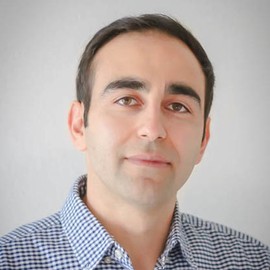
Arash Vahdat |
| 10 min break | ||
| 10:00-10:50 am |
Accelerating Diffusion Models with Step Distillation Covering trajectory-based distillation approaches (such as knowledge distillation, consistency models, and flow maps) and distribution distillation methods (such as adversarial distillation and variational score distillation). |
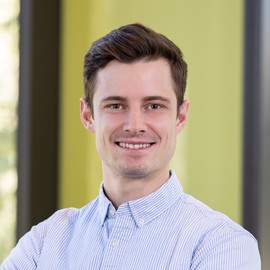
Julius Berner |
| 10 min break | ||
| 11:00-11:50 am |
From Images to Interactive World Models Covering key challenges in video-based interactive world models (such as real-time sampling, long-context memory, and block-wise causal generation) and representative approaches (such as CausVid, Self-Forcing, and APT2). |
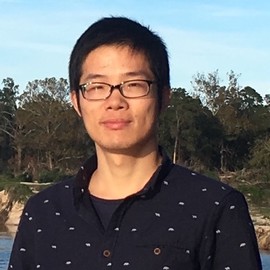
Weili Nie |
Except for external figures and videos which retain their original copyright and require separate permission for reuse, the presentations are licensed under CC BY 4.0, allowing you to freely use, share, and adapt the material for any purpose, including research, provided proper attribution is given.